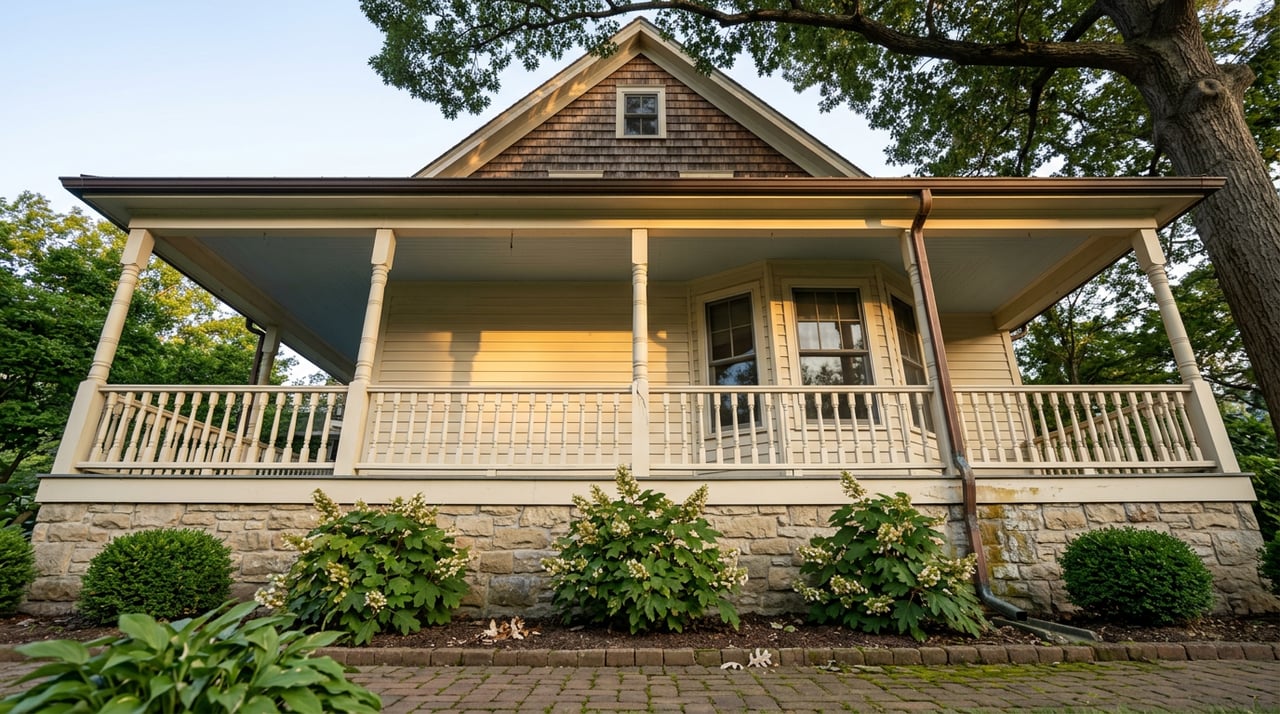
In February 2025, a six-bedroom home on Golf Lane sold for $1.75 million. Built in 1897 by Chicago architect Jarvis Hunt as a summer retreat for members of the nearby Chicago Golf Club, the house sits in what's now known locally as the Golf Lane Historic District, a pocket of Wheaton that has kept its late-1800s character since before the golf club across the street landed its own spot on the National Register of Historic Places in 2020. The listing leaned hard into that history: the architect's name, the Society-era backstory, the half-acre lot with a bluestone terrace. It worked. The home found a buyer.
Most of Wheaton's older housing stock does not move that cleanly. Right now, the city's vintage and historic listings, the pre-war homes concentrated in pockets like Farnham, Danada, and North Wheaton alongside downtown's older blocks, carry a median list price near $550,000; the cited citywide figure is a roughly $438,000 median sale price for February 2026, so the two figures are not directly comparable. But those same historic listings are sitting on the market for about 29 days and drawing an average of one offer. Meanwhile the broader Wheaton market, by an April 2026 local market snapshot, was moving at a five-day average pace with homes closing at 103 percent of list price and inventory sitting under a month of supply.
The figures show that Wheaton's vintage listings take longer to sell, but the different price measures don't establish why. If you own one and are weighing a sale, inspection preparation is one factor to consider alongside pricing and presentation.
Here's the split, using the most recent figures available for each segment.
| Wheaton overall | Wheaton vintage/historic | |
|---|---|---|
| Price figures (different measures) | $438,000 median sale price (Feb. 2026) | $550,000 median list price (current listings) |
| Typical days on market | 5 days (April 2026 snapshot) | 29 days |
| Typical offer activity | Multiple offers common, 103% sold-to-list | About 1 offer |
| Months of supply | Roughly 1.0 month | Not separately tracked, but listings linger |
The figures show a higher asking price for the cited vintage listings and a longer reported time on market, but they don't establish whether price or the sales process explains the difference. For sellers, that's useful context, not a verdict that the right response is to hold price or focus only on process.
These are three issues sellers of pre-1960s Wheaton homes can consider as they prepare for a sale.
Radon disclosure. Illinois requires it under two statutes working together: the Illinois Radon Awareness Act and the Illinois Real Property Disclosure Act. Together they obligate a seller to give the buyer the state's radon information pamphlet and to disclose any known unsafe radon concentrations before the buyer is bound to the contract. Neither law requires you to test or mitigate. But DuPage County sits in a higher-risk radon zone, and once a buyer's inspector runs a test, and most do, a result above the EPA's 4.0 picocurie action level becomes a negotiation, not a footnote. Homes with finished basements or older foundations, common in Wheaton's pre-war stock, are exactly where this tends to surface late in the process instead of early.
The systems buyers don't expect to find. A Wheaton-based inspection firm that works regularly in the city's older neighborhoods notes that aging sewer lines, outdated knob-and-tube wiring, and older furnaces show up often enough in Wheaton's vintage housing stock to be treated as routine findings, not surprises. For a buyer comparing that inspection report against a five-day-old listing across town with none of those issues, the psychological reset is real, even when the buyer knows the home is older.
Lead paint, if the home predates 1978. Nolo explains that federal law requires disclosure of known lead-based paint hazards for homes built before 1978, which covers most of Wheaton's historic inventory. It's a standard form, not a dealbreaker, but it's one more document a newer-construction sale simply skips.
These are issues sellers can plan for before inspections, alongside decisions about pricing and presentation.
There's a quieter friction point specific to Wheaton: proving how old the house actually is. The City of Wheaton's Historic Commission runs a Register of Historic Places program for homes that qualify, and the application process is explicit that a build date from the Milton Township Assessor's office isn't accepted as proof on its own. Real documentation has to come from somewhere else, and the city points applicants toward the Wheaton Public Library, which maintains a Home History Research File and a guide to local historical sources for exactly this purpose.
Most sellers never need Register status to close a sale. But the same documentation gap shows up informally in buyer due diligence. When a listing says "built circa 1897" or "early 1900s," a careful buyer's attorney sometimes asks for something more solid than a tax record, and that's a conversation better had before the home is under contract than during an attorney review window.
The homes moving in five days across Wheaton right now aren't necessarily better houses. For an older home, addressing inspection questions before the first showing can make the process more predictable.
A pre-listing radon test, run and resolved ahead of time, turns a mid-negotiation scare into a line on the disclosure form that reads "already addressed." A documented build history pulled from the library's research file, rather than left to a buyer's attorney to chase down later, removes a question before it's asked. And staging a century-old house to show its floor plan and light rather than its age closes the gap between what a buyer expects walking in and what the inspection later confirms. That's the entire premise behind Compass Concierge: front-loading the fixes and the presentation work before the home reaches the market.
Negotiation matters here too. When an inspection on an older Wheaton home does turn up something, a radon reading over 4.0 pCi/L, a sewer line that needs a camera inspection, the difference between a deal that survives and one that doesn't often comes down to how the response is negotiated in the days right after the report lands, not the discovery itself.
Does every Wheaton seller have to test for radon before listing? No. Illinois law requires disclosure of known unsafe radon levels and the state information pamphlet, not a test. But DuPage County's elevated radon risk means most buyers request one anyway, so testing ahead of listing simply moves that step earlier.
Does a 1920s Wheaton home automatically qualify for the Register of Historic Places? No. It's an application process through the City of Wheaton's Historic Commission, and age alone doesn't qualify a property. The city recommends using the Wheaton Public Library's research resources to document a home's history as part of that application.
Does a longer time on market mean a lower final sale price? The figures here do not establish whether longer time on market means a lower final sale price. They compare asking prices for vintage listings with a citywide sale-price median, rather than comparing final sale prices for the two segments.
If you're sitting on one of Wheaton's older homes and wondering whether now is the right time to test the market, these figures alone don't settle that question. Pricing, presentation, and inspection preparation are all worth discussing before the sign goes in the yard.
Kathryn Pinto works with sellers across Wheaton's historic neighborhoods every day, from Golf Lane to Farnham to the blocks around downtown, and can help sellers consider pre-listing steps as they prepare for a confident close. Let's Connect.
This article is general information, not legal, tax or financial advice. Consult a qualified professional about your situation.
Set up a consultation to meet with me to discuss your real estate goals. I look forward to meeting with you!
Contact TodayCompass
490 Pennsylvania Glen Ellyn, IL 60137