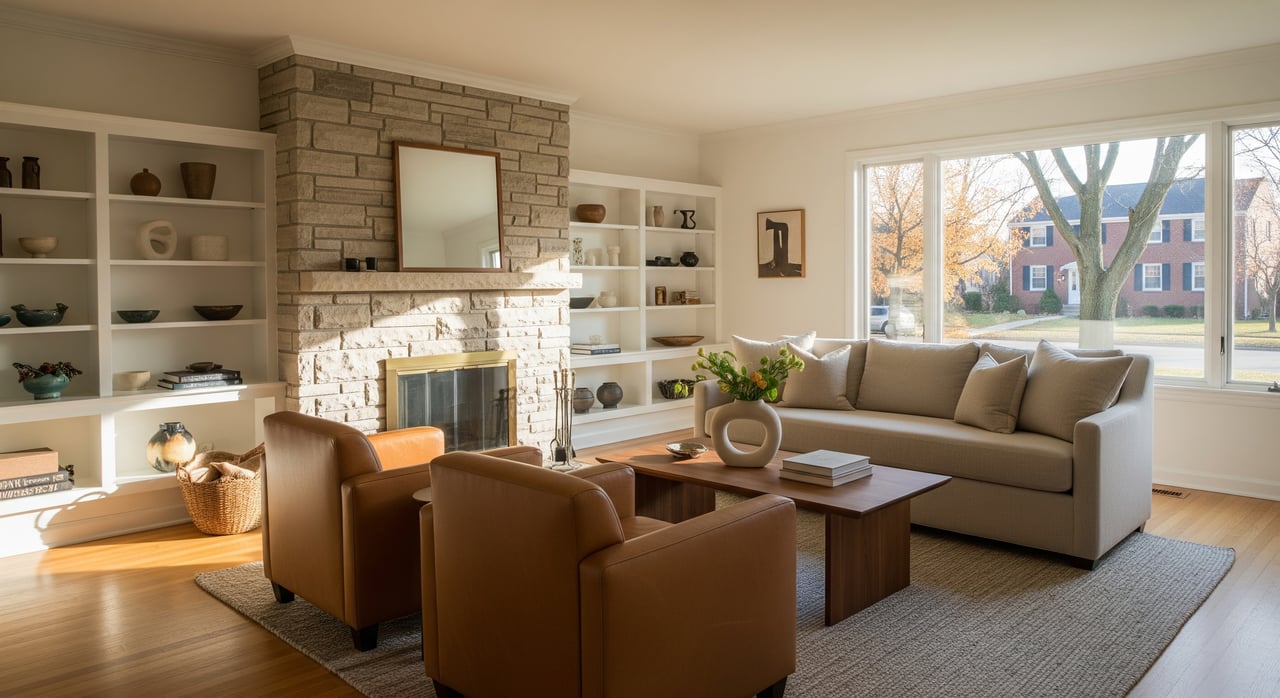
Are you debating whether to stage your Wheaton home while you still live there or wait until it’s empty? You’re not alone. Staging can shape how buyers see your home’s size, flow, and condition, and it affects how fast you sell and for how much. In this guide, you’ll learn how vacant and occupied staging compare, what it costs, how long it takes, and how to choose the right strategy for your timeline and budget. Let’s dive in.
Staging basics: what buyers notice
Staging helps buyers visualize how rooms function, where furniture fits, and how a family might live in the space. It also improves listing photos, which is often the first impression. In Wheaton’s family-oriented market, clear room purpose, easy flow, and a move-in-ready feel influence showings and offers. Well-staged homes often sell faster and can attract stronger offers than similar unstaged homes, though results vary by segment and competition.
Occupied staging: keep living while you sell
Occupied staging means you keep most of your furniture, then fine-tune with a stager’s guidance.
- What it includes: a consultation, a plan to declutter and rearrange, minor décor or furniture rentals, and photo-ready styling.
- Why it works: buyers see an authentic home that still lives well, which can resonate with family buyers.
- Best for: homes with neutral, well-scaled furniture and sellers who can maintain show-ready condition.
Typical costs for occupied staging
- Consultation visit: commonly $150 to $500.
- Targeted rentals (rugs, lamps, art, select pieces): often $50 to $300 per piece per month.
- Prep items before staging: paint, lighting swaps, and touch-ups can range from a few hundred to several thousand dollars depending on scope.
Timeline for occupied staging
- Consultation to photo-ready: often 3 to 10 days if you act quickly.
- Photography: can be scheduled soon after styling.
- Ongoing: you maintain daily show-ready condition.
Vacant staging: furnish for photos and showings
Vacant staging brings in professional furniture and décor to fully outfit key rooms. Empty rooms can look smaller in photos and in person. Furnishings define scale and flow, which is especially important if you’ve already moved out or the layout needs clarity.
Typical costs for vacant staging
- Initial setup, delivery, and installation: often $500 to $2,000 one-time.
- Monthly rental for a single-family home: commonly $1,200 to $4,000+ per month depending on size and quality of inventory.
- Virtual staging for photos only: $50 to $500 per image. This helps online, but it does not improve live showings.
Timeline for vacant staging
- Booking and delivery: usually 1 to 3 weeks before listing.
- Installation: one to two days. Many agreements have a 30 to 60 day minimum.
- De-installation: schedule after you have a ratified contract.
Wheaton market context to guide your choice
Wheaton has a mix of historic homes near downtown and established suburban neighborhoods with mid-century and newer builds. Buyers often value functional floor plans, usable yards, commute options, and a move-in-ready feel. In neighborhoods where updated homes dominate, staging to match or exceed nearby listings helps you compete. Spring brings increased buyer traffic across the Chicago suburbs, so timing your staging to meet peak activity can boost exposure.
Real-world scenarios to consider
These examples are illustrative to help you pick a path that fits your situation.
1920s Tudor near downtown (occupied staging candidate)
- Situation: your furniture suits the period but rooms feel busy and paint colors distract.
- Strategy: occupied staging plus a consultation to declutter, neutralize paint in key rooms, add targeted rentals like lighting and rugs, then professional photos.
- Why it works: you preserve character at a lower cost and get to market quickly. Buyers seeking historic charm appreciate authentic furnishings.
Empty ranch on a quiet street (vacant staging candidate)
- Situation: you’ve moved out and the home will rely on photos to attract showings.
- Strategy: full vacant staging to define living, dining, and bedrooms, plus simple exterior touches like potted plants. Consider staging a home office if you expect remote workers in the buyer pool.
- Why it works: empty rooms can feel smaller and less inviting. Furnishings show scale and flow so buyers grasp the layout.
Updated two-story with awkward layout (hybrid approach)
- Situation: you have some furniture, but the home looks sparse and the layout is unclear.
- Strategy: stage the highest-impact rooms with rentals, such as the living room, primary bedroom, and kitchen nook, and leave secondary rooms occupied.
- Why it works: you control costs while maximizing the spaces that drive decisions.
Cost and ROI: set smart budgets
Staging budgets vary by home size, condition, and vendor. Get two to three quotes for accurate numbers. As you plan budgets, consider this approach:
- Match the strategy to price point. Higher-priced homes and model-home-level listings often benefit more from full staging because buyers expect a finished presentation.
- Lean targeted for entry-level price bands. Light painting, strategic rentals, and strong styling may deliver better ROI than a full furniture package.
- Budget for prep. Fresh paint, updated lighting, and small repairs shape buyer perception and photo impact.
There is no guarantee staging will raise your sale price, but it typically improves appeal and can reduce time on market. Your agent can help weigh staging costs against likely gains based on recent Wheaton comps.
Timeline, seasonality, and speed to market
If you need to list within a week, occupied staging is usually faster. If you have a two to three-week runway and an empty property, vacant staging is feasible. In Wheaton, spring traditionally brings the most buyer activity. If you are targeting that window, plan your consultation, prep, and staging date backward from your ideal photo day so you hit peak exposure.
Buyer psychology: stage for how people live
- Clarify room purpose. Show a place for dining, working, and relaxing.
- Right-size furniture. Pieces that are too large shrink a room. Pieces that are too small can make it feel cold.
- Reduce friction. Clear traffic flow from entry to kitchen to living areas.
- Spotlight lifestyle. In Wheaton, a mudroom, organized closets, and a simple home office can speak to commuters and remote workers.
Decision framework: choose vacant or occupied
Work through these steps before you commit to a plan.
- Assess condition and inventory
- Empty home: strong candidate for vacant staging or virtual staging for photos, with live furniture for showings if possible.
- Good, neutral furniture: occupied staging plus decluttering may be enough.
- Worn or mismatched furniture: consider partial or full vacant staging.
- Evaluate price point and ROI
- Higher price bands: buyers expect polish, so full staging often pays off.
- Lower price bands: targeted occupied staging can deliver good returns.
- Consider buyer profile and competition
- If nearby listings are updated and move-in ready, match or exceed their presentation.
- In historic pockets, authenticity matters. Thoughtful occupied staging that preserves character may resonate.
- Timing constraints
- Need speed: occupied staging is quicker to execute.
- Have runway: vacant staging is a strong option for empty homes.
- Safety, logistics, and comfort
- Vacant staging requires delivery, installation, and pickup coordination. Confirm vendor insurance and any HOA rules.
- Occupied staging requires daily upkeep to maintain show-ready condition.
- Budget and financing options
- If you prefer not to pay upfront for staging or cosmetic updates, ask about brokerage-backed options like a Concierge-style program. Terms vary by market, so confirm what’s available locally through your agent.
When to consider Compass Concierge
Concierge-style programs offered by some brokerages finance pre-listing improvements such as staging, cleaning, painting, and repairs, then repayment happens at closing from sale proceeds. Availability and terms vary by market.
Consider using a program like this when:
- You lack cash on hand for meaningful cosmetic improvements that could raise marketability or price.
- You need work completed quickly to capture a key listing window or improve photos.
- The projected increase in sale price or reduced time on market is likely to outweigh program costs.
Before you commit, confirm:
- Services covered, including staging, repairs, and landscaping.
- Repayment terms and whether any fees or interest apply.
- Approved vendors, who manages the project, and the expected timeline.
- How the program fits into your listing agreement and closing plan.
Quick pre-staging checklist
Use this to get photo-ready faster:
- Declutter: remove extra furniture, personal items, and family photos.
- Deep clean: carpets, windows, baseboards, appliances, and vents.
- Minor repairs: tighten hardware, fix doors and cabinets, patch and paint.
- Neutralize: fresh, neutral paint in high-impact rooms if needed.
- Curb appeal: mow, edge, prune, add seasonal planters, refresh the front door.
- Photo-ready: replace bulbs, open blinds, make beds, clear countertops.
Questions to ask local stagers and contractors
- Do you have a portfolio of staged homes in Wheaton or DuPage County?
- What are your delivery and monthly fees for a home this size?
- What is your minimum rental term, and do you offer per-room pricing?
- Can you coordinate a quick de-installation after a contract is signed?
- Are you insured, and can you share references from local agents?
- For painters and contractors: what is the timeline, are permits required, and what is your lien waiver policy?
Your next steps in Wheaton
- Decide your target list date and work backward to schedule your consultation, prep, and photos.
- Walk your home with a staging checklist and identify the rooms that most influence buyers: living room, kitchen, primary bedroom, dining, and a simple office.
- Get two to three quotes from local stagers for occupied, vacant, or hybrid options.
- If upfront costs are a concern, talk to your agent about a Concierge-style program and confirm local terms.
If you want a presentation-first plan tailored to your Wheaton home, reach out to Certified Staging Consultant and Compass broker Kathryn Pinto for a room-by-room strategy, vendor coordination, and a clear timeline.
FAQs
What is the difference between vacant and occupied staging for Wheaton homes?
- Vacant staging furnishes an empty home with rented pieces to define rooms, while occupied staging uses your existing furniture with targeted tweaks and rentals to improve photos and flow.
How much does professional staging cost in the Wheaton area?
- Occupied consultations often run $150 to $500 with per-piece rentals at $50 to $300 per month, while full vacant staging can be $1,200 to $4,000+ per month plus a $500 to $2,000 setup fee.
How long does staging take before listing my Wheaton home?
- Occupied staging can reach photo-ready in 3 to 10 days if you move quickly, while vacant staging typically requires 1 to 3 weeks for booking and a one to two-day install.
Does staging guarantee a higher sale price for my home?
- No. Staging boosts appeal and can reduce days on market and strengthen offers, but outcomes depend on pricing, competition, and market conditions.
Is virtual staging enough if my Wheaton home is empty?
- Virtual staging improves photos only and does not enhance live showings. It can be a budget-friendly stopgap, but real furnishings are best for in-person tours.
Should I stage every room when selling in Wheaton?
- Prioritize high-impact spaces like the living room, kitchen, primary bedroom, dining area, and a simple office. Secondary bedrooms and storage can be lower priority.
Can Compass Concierge help pay for staging and pre-sale work?
- Many brokerages offer Concierge-style programs that cover staging and cosmetic updates with repayment at closing. Confirm local availability, covered services, and terms with your agent.