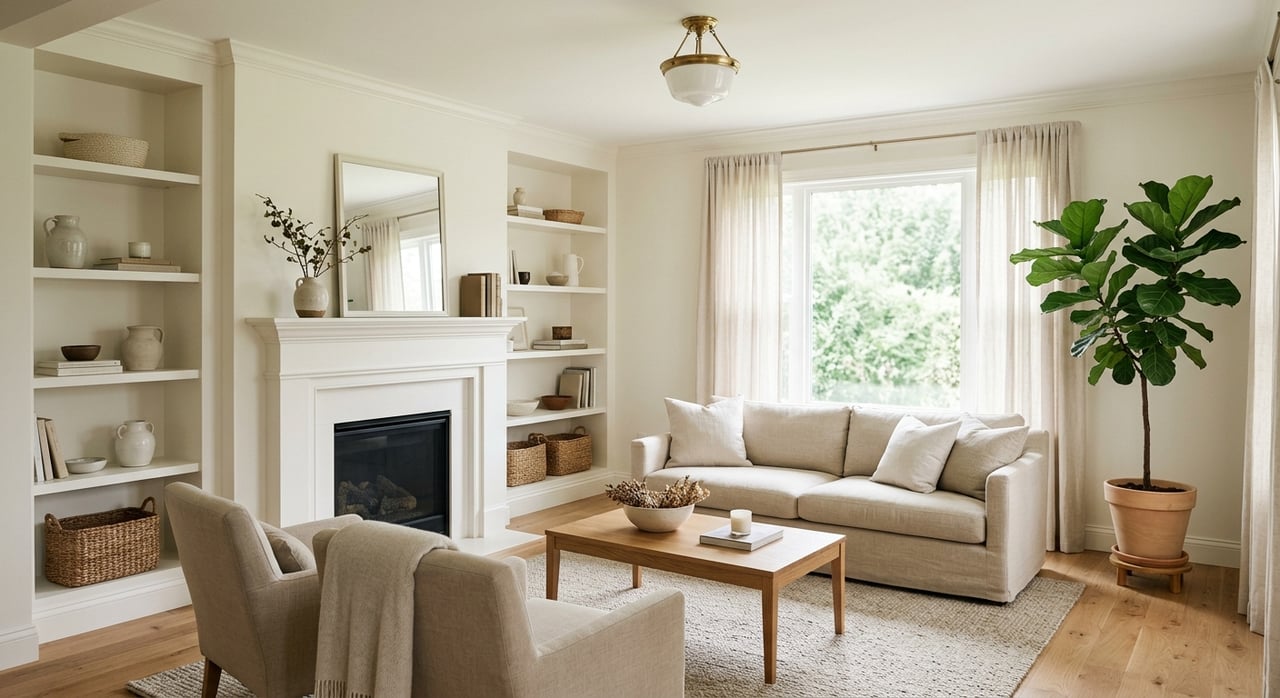
If you are getting ready to sell in Glen Ellyn, one of the biggest mistakes you can make is staging your home like every other house on the market. This village has a wide mix of architectural styles, from older Queen Anne and Colonial Revival homes to 1950s Ranch houses and newer infill construction. When your staging matches your home’s architecture, buyers can understand the space faster, connect with its character, and respond more strongly online and in person. Let’s dive in.
Glen Ellyn is not a one-style housing market. Village preservation materials identify a broad mix of home styles, including Queen Anne, Colonial Revival, Ranch, Craftsman, Tudor Revival, Dutch Colonial, and Prairie homes, along with newer construction.
That variety matters when you prepare a home for sale. A staging plan that works beautifully in a 1950s Ranch may feel wrong in a historic Victorian, and a generic setup can blur the features that make your home memorable.
The local housing stock also supports a style-by-style approach. In the Village’s 2007 survey of Glen Ellyn survey areas, 302 properties, or 34% of surveyed structures, were built in the 1950s, and most of those homes were modest Ranch or Minimal Traditional residences. Late-19th-century Queen Anne homes were much rarer, while many strong homes from the 1920s and 1930s were revival-style residences.
That means buyers in Glen Ellyn are often comparing very different types of homes. Your presentation should help them understand what makes your house work, rather than asking them to sort that out on their own.
Staging is not just about looks. It is about helping buyers picture how they would live in the home and helping your listing perform well from the first photo through the first week of showings.
According to the National Association of Realtors 2025 Profile of Home Staging, 83% of buyer’s agents said staging made it easier for buyers to picture a property as their future home. NAR also reported that 49% of seller’s agents said staging reduced time on market, and 29% said staged homes received a 1% to 10% increase in the dollar value offered.
Online presentation is a major part of that equation. NAR found that photos were important or very important to 88% of sellers’ agents’ clients, and 31% of buyers’ agents said staging made buyers more willing to walk through a home they first saw online.
That matters in Glen Ellyn’s current market. Redfin market data showed a median sale price of about $550,000 and average days on market of 41 as of April 2026, so your first impression still carries real weight.
The goal is not to erase your home’s style. The goal is to clarify it.
In practice, that means your furniture scale, layout, accessories, and photography plan should support the architecture that is already there. When buyers can quickly read the home’s design, they tend to feel more confident about the value and the lifestyle it offers.
Below are the staging cues that make the most sense for several common Glen Ellyn home types.
Queen Anne homes are known for asymmetry, wraparound porches, turrets, mixed materials, decorative millwork, and distinctive windows. In Glen Ellyn, where these homes are relatively rare, those original details are often a major part of the appeal.
That means staging should stay restrained. Bulky furniture, oversized art, or heavy accessories can compete with spindlework, trim, stained or multi-pane glass, and ornate entries that buyers want to notice.
If your home has a front porch, treat it as a feature, not an afterthought. A small, simple seating arrangement can help buyers see it as usable space without blocking architectural detail.
Inside, keep pathways open and walls relatively calm so trim profiles, window shapes, and ceiling details can read clearly. For photography, include a full exterior shot along with detail images of the entry, windows, and decorative elements that set the home apart.
For historic homes, Glen Ellyn’s preservation guidance focuses heavily on front facades and other readily visible features. The Village also states that original parts should be repaired rather than replaced whenever possible.
For sellers, that means presentation should highlight what is authentic and intact. Even small updates should support the home’s visible character rather than distract from it.
Colonial Revival homes typically draw strength from balance. The style often features symmetrical facades, formal entry treatments, columns or pilasters, and details like fanlights, sidelights, or Palladian windows.
Your staging should reflect that same sense of order. Centered furniture groupings, simple window treatments, and a restrained color palette usually work better than dramatic styling that pulls attention off the architecture.
In many Colonial Revival homes, the front door is one of the strongest visual anchors. Exterior prep should make that entry feel crisp and welcoming, with a clean path, uncluttered steps, and minimal décor.
Photography should also support the style. Straight-on exterior images often work well because they emphasize the home’s symmetry and make the façade feel composed and intentional.
Glen Ellyn has a significant number of 1950s homes, and many are Ranch or Minimal Traditional residences. Ranch homes are generally one story with low-pitched roofs, broad overhangs, asymmetrical plans, integrated garages, and a strong connection to outdoor living areas.
These homes usually benefit from lighter, simpler staging. Low-profile furnishings, fewer visual barriers, and clean layouts can help buyers appreciate width, flow, and ease of living.
In a Ranch home, you want buyers to feel how spaces connect. Avoid overfilling rooms with furniture, and be careful with tall pieces that interrupt sightlines or make ceilings feel lower.
Photography should show the home’s horizontal lines, broad windows, and connection to the yard, patio, or deck. If the backyard is part of the lifestyle story, it should be part of the media plan too.
If you are not doing a full-home staging project, prioritize the spaces that tend to carry the most weight. NAR reported that the living room, primary bedroom, dining room, and kitchen are the rooms most often staged by seller’s agents.
That can be especially helpful for Ranch homes, where a few well-presented rooms can quickly shape a buyer’s impression of the entire layout. Strategic editing often does more than adding more furniture.
The Village’s survey found that 13% of surveyed structures were built after 1990. Glen Ellyn also recognizes new homes and buildings that fit the style and scale of the surrounding streetscape, which is a useful reminder that newer homes still perform best when they feel grounded in their setting.
For staging, that means aiming for a polished and cohesive look instead of a generic one. Accessories, finishes, and furniture should feel consistent with the architecture so buyers see a complete story rather than a collection of trends.
Newer homes often win buyers with ceiling height, natural light, and room size. Your staging and photography should make those strengths obvious.
Use layouts that show how larger spaces function, avoid crowding open-concept areas, and include images that place the home within the block or streetscape when helpful. Buyers are not only evaluating the interior. They are also considering how the home sits in Glen Ellyn as a whole.
A strong staging plan should always work hand in hand with a strong photo plan. Since most buyers begin online, your listing media needs to make a fast, clear impression.
NAR’s photo-shoot prep advice includes opening blinds, removing magnets and distracting art, and paring down furniture so rooms look larger on camera. Those simple steps matter across every style, but they are especially important in a market where homes can vary so much in age, layout, and visual character.
In other words, staging is not finished when the house looks good in person. It is finished when the home also reads well in photos and video.
Before moving furniture or buying accessories, identify what the architecture is asking for. Is the main strength original detail, formal balance, casual flow, or bright scale?
That one decision shapes everything else, from decluttering priorities to furniture selection to the exterior shot list.
You do not always need a full redesign to make a meaningful difference. NAR reported a median staging-service cost of $1,500, which makes a focused, partial approach a smart option for many sellers.
If you want impact without overdoing the budget, start with the living room, primary bedroom, dining room, and kitchen. Those spaces often carry the listing online and help set the tone for the rest of the showing.
Some sellers know their home needs more than styling alone. Compass Concierge may help by fronting the cost of services such as staging, deep cleaning, decluttering, cosmetic renovations, landscaping, and painting, with repayment generally due when the home sells.
That can create breathing room if your home needs preparation before it goes live. Compass also describes a Private Exclusive, then Coming Soon, then public launch workflow, which can be useful when you want time to prep the home thoughtfully before the full market debut.
The best staging does not feel forced. It helps buyers immediately understand the architecture, the layout, and the lifestyle your home offers.
In Glen Ellyn, that is especially important because buyers are often looking at a wide mix of home types. When your presentation fits your architecture, your listing feels more credible, more polished, and easier to remember.
If you are planning to sell, a style-aware strategy can help you make smarter decisions about what to edit, what to highlight, and where to invest before listing. For tailored guidance on presenting your Glen Ellyn home for today’s buyers, connect with Kathryn Pinto.
Set up a consultation to meet with me to discuss your real estate goals. I look forward to meeting with you!
Contact TodayCompass
490 Pennsylvania Glen Ellyn, IL 60137